Knowing how long tire life last can help you plan, avoid unexpected tire problems, and stay safer on the road. Tires do not have one fixed lifespan. Their service life depends on mileage, driving habits, road conditions, weather, maintenance, and tire age. For drivers in Texas, heat and prolonged sun exposure can also contribute to tire aging. Therefore, checking your tires regularly is just as important as knowing when they were installed.
There is no exact number of years or miles that applies to every tire. A tire may wear out sooner because of aggressive driving or poor maintenance, while another may last longer under careful driving conditions.
Some tires are designed for higher mileage, but the actual lifespan depends on how and where they are used. Michelin recommends having tires inspected at least once a year after five years of service and replacing them at 10 years from the date of manufacture as a precaution, regardless of remaining tread.
However, you should not wait for a specific age if your tires show signs of damage or excessive wear.
Signs That Your Tires Need Replacement
Check your tires for:
- Tread worn to the wear indicators.
- Cracks in the tread or sidewalls
- Bulges or blisters
- Cuts or punctures
- Uneven tread wear
- Frequent loss of air
- Excessive vibration or unusual road noise
What Affects Tire Life in Texas?
Texas driving conditions can be hard on tires. While heat is an important factor, several other conditions can shorten tire life.
1. High Temperatures and Sun Exposure: Texas summers can bring high temperatures and intense sunlight. Tires are exposed to heat every time you drive, while parked vehicles can also sit in direct sunlight for long periods. Over time, heat and UV exposure can contribute to rubber degradation. Warmer climates, sunlight, and poor storage can contribute to tire aging.
2. Tire Pressure: Incorrect tire pressure can affect how your tires wear. Underinflated tires can create excess heat and cause the edges of the tread to wear faster. Overinflation can also affect handling and lead to uneven wear. Check your tire pressure regularly, preferably when the tires are cold. Use the pressure recommended by your vehicle manufacturer rather than the maximum pressure printed on the tire sidewall.
3. Driving Habits: The way you drive has a direct effect on tire wear. Hard acceleration, sudden braking, sharp cornering, and frequent high-speed driving can increase stress on your tires. Aggressive driving can therefore reduce their useful life.
4. Road Conditions: Texas roads can expose tires to potholes, rough pavement, construction areas, and debris. Hitting a pothole can damage the tire or wheel, even when there is no immediate flat. A hard impact can also contribute to alignment problems. If your vehicle begins pulling to one side or the steering wheel is no longer centered, have the alignment checked.
5. Wheel Alignment: Poor alignment can cause your tires to wear unevenly. You may notice that one part of the tread is wearing faster than the rest.A proper wheel alignment helps the tires contact the road correctly and can help maximize tire life.
6. Tire Rotation: Different tires on your vehicle can wear at different rates. For example, front tires may experience more wear on vehicles where they handle steering and driving forces. Regular tire rotation can help distribute wear more evenly.
How to Make Your Tire Life Last Longer
You cannot control every factor that affects tire life. However, regular maintenance can help you get more useful service from your tires.
Follow these simple habits:
- Check tire pressure at least once a month.
- Inspect the tread and sidewalls for damage.
- Rotate tires according to the manufacturer’s recommendation.
- Keep your wheels properly aligned and balanced.
- Avoid aggressive acceleration and braking.
- Slow down around potholes and rough roads.
- Check your tires before long road trips.
- Keep track of your tire installation and manufacturing dates.
These steps can help reduce uneven wear and allow you to identify problems before they become serious.
How to Check Your Tire Age
Tire age is not always obvious by looking at the tread. You can find the manufacturing date on the tire’s DOT Tire Identification Number (TIN).
The last four digits show the week and year the tire was manufactured. For example, a code ending in 2322 indicates that the tire was made during the 23rd week of 2022.
Some vehicle and tire manufacturers recommend replacing tires between six and 10 years old, regardless of tread condition. Always check the recommendations for your specific tires and vehicle.
When Should You Visit a Tire Shop?
You do not need to wait until you have a flat tire to have your tires inspected. If you notice uneven wear, cracks, vibrations, repeated pressure loss, or reduced handling, have a professional inspect them.
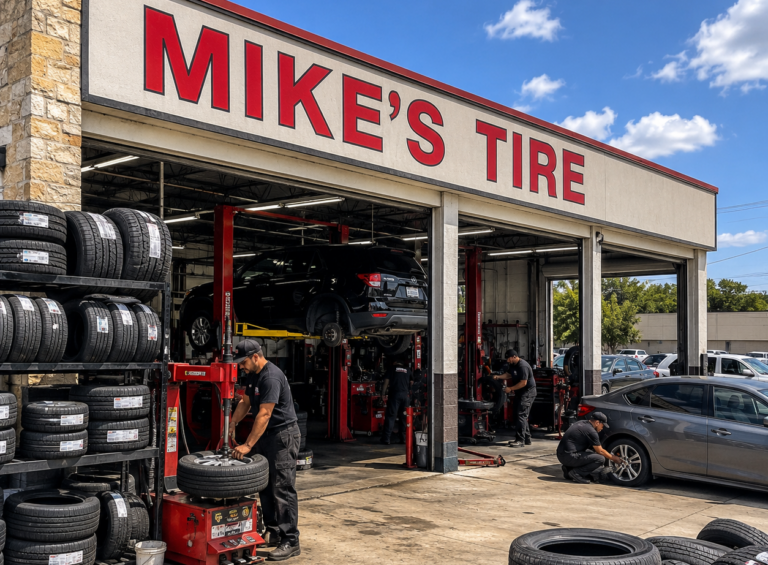
A local tire shop Lewisville can check your tires, pressure, tread, and overall condition. Mike’s Tire in Lewisville provides new and gently
used tires, flat tire repair, and vehicle state inspection services.
Drivers looking for a tire shop Azle can also visit Mike’s Tire’s Azle location for tire services and professional assistance.
So, how long do tires last? There is no universal answer. Tire life depends on the tire itself, driving conditions, maintenance, climate, road surfaces, and age.
Mike’s Tire has locations in Lewisville and Azle to help drivers with their tire needs. Whether you need new tires, gently used tires, a tire repair, or an inspection, the team can help you determine the right next step.
Mike’s Tire – Lewisville, TX
Mike’s Tire – Azle, TX
Phone: (817) 752-2166
Visit us in Lewisville or Azle for your tire and inspection needs.